Modified Timber — Comparing Technologies for Specifiers
The modified timber market has matured significantly over the past decade. What was once a niche category dominated by a handful of branded products is now a genuine specification option across a wide range of exterior and joinery applications — with multiple competing technologies, a growing body of independent test data, and increasing regulatory pressure on the conventional alternatives it displaces.
The challenge for specifiers is that “modified timber” is not a single material. It is a category descriptor covering at least four distinct technologies — furan resin modification, acetylation, thermal modification, and DMDHEU treatment — each with different performance profiles, different feedstock origins, different consequences for density and hardness, and different trade-offs between dimensional stability, biological durability, and structural integrity.
Understanding how to evaluate these technologies against each other — and against the untreated hardwood and preservative-treated softwood they are increasingly specified to replace — is the core task of this guide. All performance data referenced is independently verified. No manufacturer claims are presented without a named testing body and standard reference.
What Is Modified Timber?
Modified timber is wood in which the cell wall structure has been permanently altered through a chemical or thermal process to improve performance characteristics — principally dimensional stability, biological durability, and moisture resistance. The defining characteristic of a genuinely modified timber product is permanence: the performance improvement is structural and intrinsic to the material, not dependent on a surface treatment, a preservative coating, or a depletable active agent.
This distinction separates modified timber from two categories it is often compared with:
Preservative-treated timber introduces biocidal agents — typically copper-based compounds — into the wood under pressure. The timber cell wall structure is not changed; the treatment relies on the continued presence of toxic chemistry to resist biological attack. As preservative agents are depleted through weathering and leaching, durability performance diminishes. The modification is not permanent.
Surface-coated timber applies protective films or oils to the outer face of the board. The cell wall is unaffected. Protection is limited to the depth of penetration of the coating and must be renewed as the coating weathers.
Genuine modified timber achieves its performance through changes to the wood itself. Whether the mechanism is polymer infill, chemical substitution, or thermal restructuring of the cell wall, the result is a material whose performance profile is determined by its internal structure rather than by what has been added to its surface.
What the Wood Protection Association Defines as Modified Timber
The Wood Protection Association defines modified wood as timber in which the chemical, physical, or biological properties of the cell wall have been durably changed through a controlled industrial process. This definition provides a clear basis for distinguishing genuinely modified timber from preservative-treated alternatives, and it is the definition referenced by the EN 350:2016 classification framework that extended durability classification to modified wood products.
For a B2B specifier evaluating a product described as “modified timber”, the first verification question is whether the modification is genuinely structural and permanent, and whether it has been tested and classified under EN 350:2016 methodology by an independent body.
The Four Principal Modified Timber Technologies
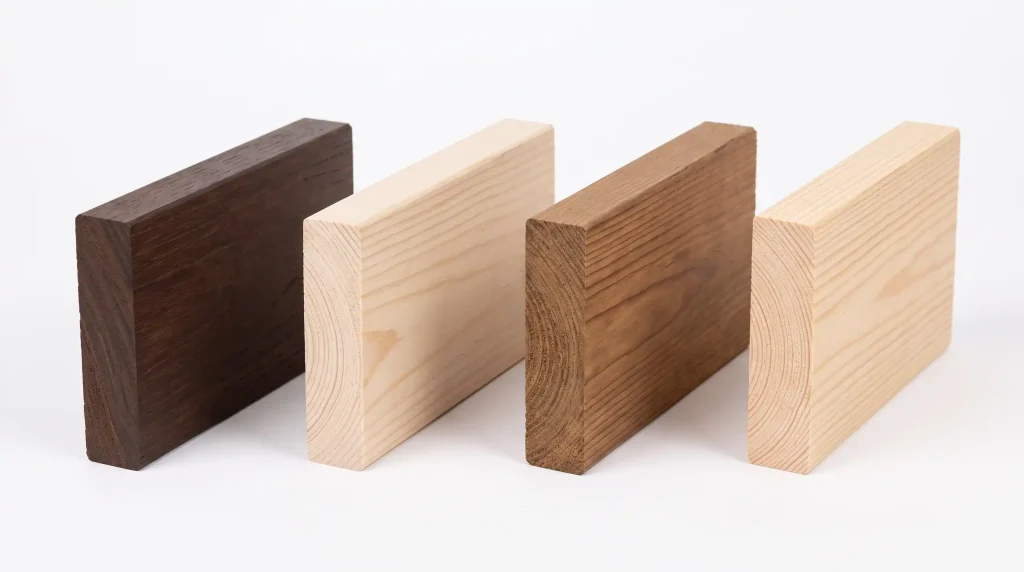
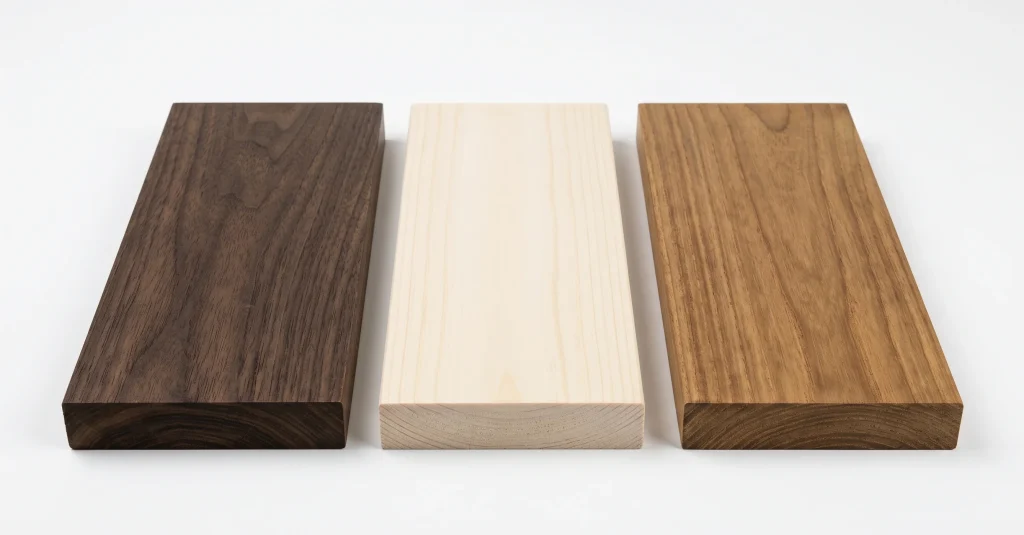
The commercially significant technologies currently available to specifiers are furan resin modification (furfurylation), acetylation, thermal modification, and DMDHEU modification. Each addresses the same fundamental problem — wood’s hygroscopicity, which drives dimensional instability and creates the conditions for biological decay — through a different mechanism.
Furan Resin Modification (Furfurylation)
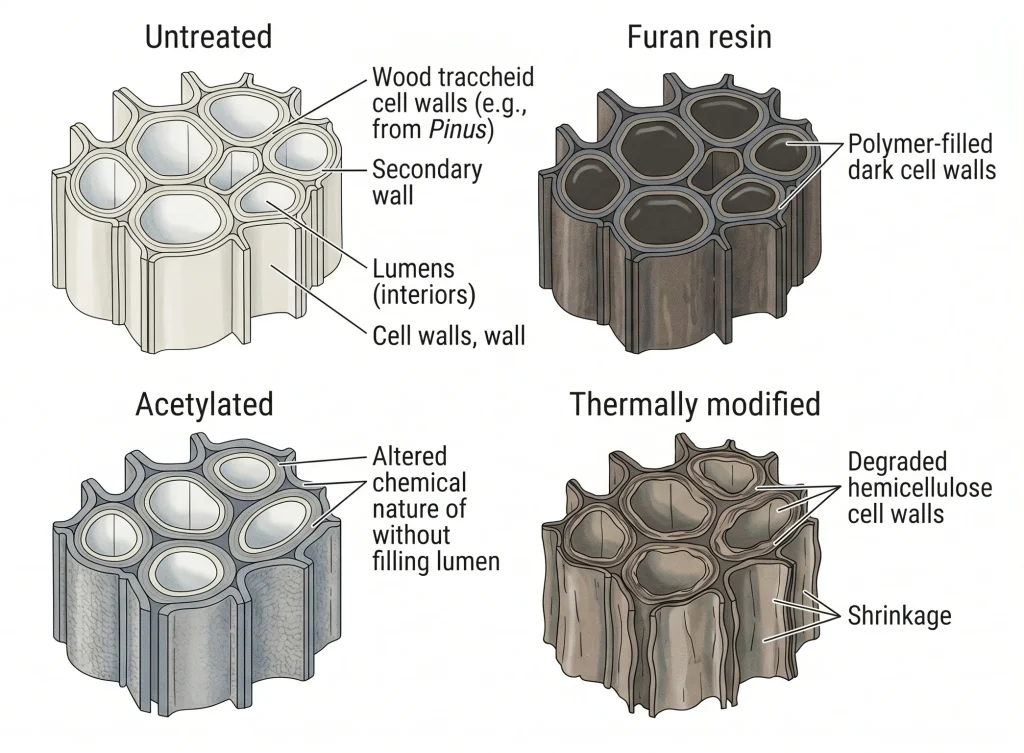
Furan resin modification impregnates timber with furfuryl alcohol — a bio-based compound derived from agricultural residues including sugarcane bagasse, corn cobs, and oat husks — under vacuum-pressure conditions. The impregnated timber is then cured at elevated temperature, causing the furfuryl alcohol to polymerise in situ within the cell wall, forming polyfurfuryl alcohol (PFA): a hard, thermosetting polymer that bonds covalently with the wood’s cellulose, hemicellulose, and lignin.
This process produces two simultaneous improvements. First, the polymer physically occupies space within the cell wall — the bulking effect — reducing the volume available for water uptake. Second, the polymerisation reaction blocks or consumes the free hydroxyl groups that would otherwise attract and bind water molecules. The result is a timber that is denser, harder, more dimensionally stable, and more biologically durable than the untreated baseline — without the addition of any biocidal chemistry.
Ultimate FBR is produced via furan resin modification of Indonesian hardwood, independently tested by IPB University (Indonesia) and the Université de Lorraine (France), and classified at Class 2 durability under EN 350:2016.
Acetylation
Acetylation modifies timber by reacting the free hydroxyl groups in the cell wall with acetic anhydride. The hydroxyl groups are permanently converted to acetyl groups — a chemical substitution that reduces the wood’s affinity for moisture without introducing any new substance into the material. No polymer is deposited; no mass is added. The modification is purely chemical.
The result is a timber with substantially reduced moisture uptake, very high dimensional stability, and — in commercial products based on radiata pine — Class 1 biological durability under EN 350. The most commercially prominent acetylated timber product is Accoya. Acetylated timber has a slight reduction in density compared to the untreated baseline and requires stainless steel or hot-dip galvanised fixings throughout due to residual material acidity.
Thermal Modification
Thermal modification exposes timber to temperatures of 160–230°C in a low-oxygen or steam environment. The elevated temperature degrades the hemicellulose fraction of the cell wall — the most hygroscopic component — reducing moisture uptake and improving dimensional stability. No chemical reagents are introduced; the process relies entirely on heat and steam.
The performance trade-off is significant: the same heat treatment that improves moisture performance also reduces bending strength, toughness, and impact resistance. Research from Virginia Tech’s Center for Forest Products Business confirms that thermally modified timber is mechanically weaker than untreated timber of the same species. This limits its use in structural or load-bearing applications. Commercial thermally modified products include Lunawood (ThermoWood process) and Thermory, both produced from sustainably managed softwood species.
DMDHEU Modification
DMDHEU (dimethylol dihydroxyethylene urea) modification is the least widely known of the four technologies in European construction markets. DMDHEU is a cross-linking agent that bonds to the cell wall, reducing hygroscopicity and improving dimensional stability. Performance data for DMDHEU-modified timber is less consistently published than for the other three technologies, and independent third-party verification is less widely available.
For most B2B specification scenarios, the three primary technologies — furan resin, acetylation, and thermal modification — account for the overwhelming majority of commercially available options, and the focus of specification comparison should be directed towards these.
Comparing Modified Timber Technologies: The Full Performance Picture
The specification decision between modified timber technologies cannot be made on the basis of a single performance criterion. A specifier who selects acetylated timber purely on the basis of its dimensional stability advantage will overlook the density reduction and fixing requirements that may make it less suitable for the specific application. A specifier who selects thermally modified timber on the basis of its lower cost may overlook the bending strength reduction that limits its use in high-traffic decking. The comparison must be made across the full set of performance criteria relevant to the application.
The table below presents the principal modified timber technologies alongside untreated hardwood and preservative-treated softwood, across the criteria most relevant to B2B exterior and joinery timber specification.
| Property | Furan Resin (Ultimate FBR) | Acetylation (e.g. Accoya) | Thermal Modification | Preservative-Treated Softwood | Untreated Hardwood |
|---|---|---|---|---|---|
| Modification mechanism | Polymer infill + covalent bonding | Chemical -OH substitution | Hemicellulose degradation | Biocidal impregnation | None |
| Effect on density | Significant increase | Slight decrease | Decrease | No change | Baseline |
| Effect on hardness | Significant increase | Minimal change | Decrease | No change | Baseline |
| Typical ASE range | 40–50% (Ultimate FBR: 44.33% verified) | 50–65% | 20–40% | N/A | 0% |
| Durability class (EN 350) | Class 2 (verified) | Class 1 (typical) | Class 2–3 (typical) | Class 2–3 (treatment dependent) | Class 3–4 (species dependent) |
| Structural suitability | Yes | Yes | Limited | Yes | Yes |
| Fire performance | B-s2-d0 achievable | Euroclass D (typical) | Variable | Standard | Standard |
| Biocidal chemistry | None | None | None | Yes — copper-based | None |
| Fixing requirement | Standard stainless/galvanised | Stainless/galvanised required | Standard stainless/galvanised | Hot-dip galvanised required | Standard stainless/galvanised |
| Bio-based feedstock | Yes — agricultural waste | Yes — acetic anhydride | No reagent | No | N/A |
| FSC/PEFC availability | FSC® Ready, PEFC™ Ready, SVLK | FSC certified | Typically FSC/PEFC available | Variable | Variable |
| End-of-life | Standard wood waste stream | Standard wood waste stream | Standard wood waste stream | Restricted — biocidal content | Standard wood waste stream |
Reading the Comparison: Key Observations for Specifiers
On dimensional stability: Acetylation consistently achieves the highest ASE values in published research — typically 50–65% — making it the strongest performer on pure dimensional stability. Furan resin modification achieves 40–50% ASE in commercial products, with the independently verified figure for Ultimate FBR at 44.33%. Thermal modification achieves the lowest ASE, typically 20–40%. For applications where dimensional stability is the primary criterion, acetylated timber has a measurable advantage. For applications where dimensional stability is one of several equally weighted criteria alongside density, hardness, and fire performance, furan resin modification presents a more balanced profile.
On density and hardness: Acetylation slightly reduces density compared to the untreated baseline. Furan resin modification substantially increases density — Ultimate FBR is verified at 743 kg/m³. For hardwood decking, high-traffic joinery, and applications where surface indentation resistance matters, this difference is a specification-relevant factor. Thermal modification reduces both density and bending strength — the mechanically weakest outcome of the three principal technologies. Virginia Tech’s Center for Forest Products Business confirms this: thermally modified wood has lower bending strength and impact resistance than untreated timber of the same species. For structural or load-bearing applications, thermal modification should not be specified without engineering assessment.
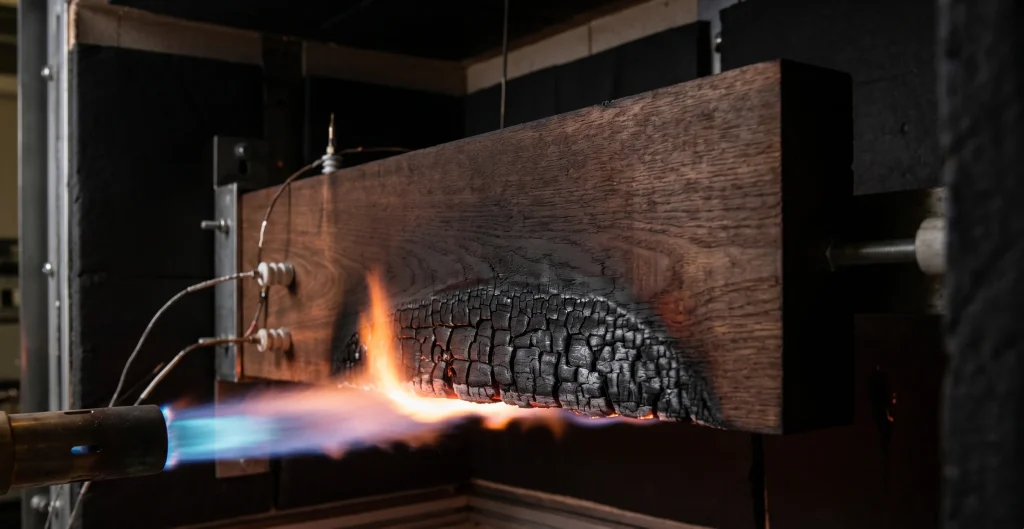
On fire performance: Only furan resin modified timber — specifically Ultimate FBR — achieves Euroclass B-s2-d0 fire performance under EN 13501-1 among the three principal technologies. Acetylated and thermally modified products typically achieve Euroclass D. For mid-rise residential, commercial, and public realm applications where Euroclass B or better is required, this is a decisive specification differentiator.
On end-of-life: Preservative-treated timber is the weakest performer at end of life. Copper-based preservatives restrict combustion options and require specific waste classification in many jurisdictions. Modified timber — whether furan resin, acetylated, or thermally treated — contains no biocidal heavy metals and can enter standard wood waste streams or be combusted for energy recovery without the emissions concerns associated with preservative-treated material.
Verified Performance Data: Ultimate FBR Modified Timber
Within the furan resin modification category, the independently verified performance data for Ultimate FBR provides the most complete and transparent data set available for this technology in the current market. Testing has been conducted by IPB University (Indonesia) and the Université de Lorraine (France), with results validated against EN, BS, ASTM, AWPA, and SNI standards.
| Performance Property | Untreated Hardwood | Ultimate FBR | Test Standard |
|---|---|---|---|
| Density | Baseline | 743 kg/m³ | Tested |
| Volumetric swelling | 10.04% | 2.35% | EN 350 |
| Water uptake | 109.58% | 35.07% | ASTM |
| Anti-Swelling Efficiency (ASE) | — | 44.33% | Tested |
| Durability classification | Class 3–4 (species dependent) | Class 2 | EN 350:2016 |
| Fire performance | Not classified | B-s2-d0 achievable | EN 13501-1 |
743 kg/m³ places Ultimate FBR firmly in the hardwood density range — relevant for surface hardness, indentation resistance, and fastener pull-through strength in structural and decking applications.
ASE 44.33% / volumetric swelling 2.35% means the board moves a fraction of what untreated hardwood would under the same moisture exposure — directly relevant to gap design in decking, joint geometry in cladding, and paint film longevity in window and door frames.
Water uptake 35.07% vs 109.58% means the board responds far less dramatically to rain events and humidity cycling — reducing the frequency and severity of the moisture conditions under which fungal decay could theoretically occur.
Class 2 durability (EN 350:2016) — achieved without biocidal preservatives, applying uniformly to the full cross-section of every board, and permanent over the service life of the installation.
B-s2-d0 achievable — the only technology in this comparison to offer this fire classification at material level under EN 13501-1.
Matching Modified Timber Technology to Application
The most defensible specification decision is one that matches the technology to the performance requirements of the application. The following framework maps the principal technologies to the applications where each is best suited.
Applications Where Furan Resin Modification Excels
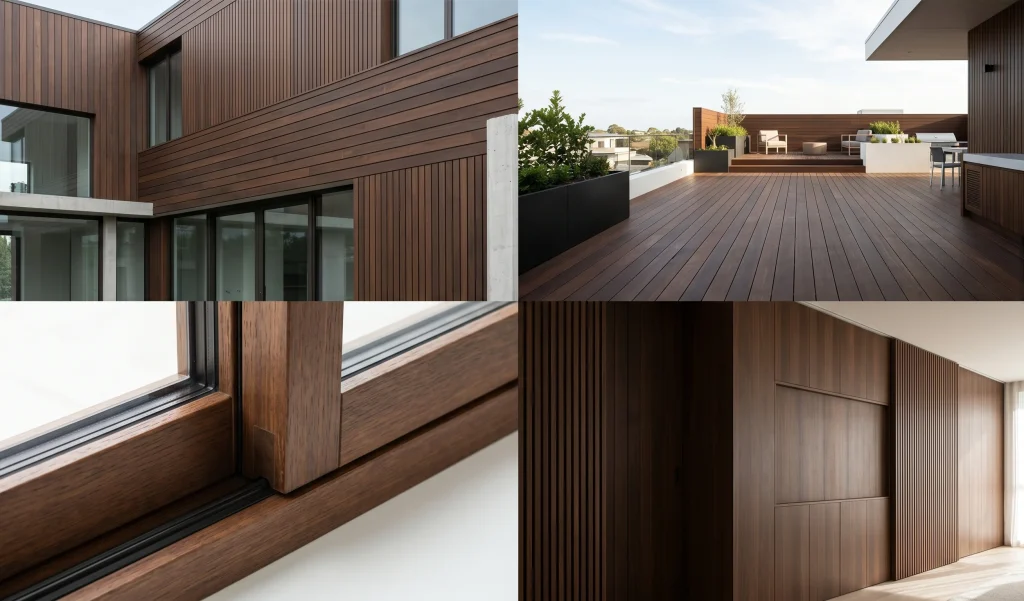
Exterior cladding and façades requiring fire performance The combination of Euroclass B-s2-d0 fire performance, high dimensional stability (ASE 44.33%), and Class 2 durability makes furan resin modified timber the most complete specification option for mid-rise commercial façades where fire performance classification is a regulatory requirement. No competing technology in this category offers this combination at material level.
Hardwood decking in commercial and high-traffic applications The density of 743 kg/m³ and the associated surface hardness make furan resin modified timber more appropriate than thermally modified alternatives for commercial decking where indentation resistance is a specification requirement.
Exterior joinery for dimensionally demanding applications Window and door frames require both dimensional stability and biological durability across the service life of the component. The ASE of 44.33% and Class 2 durability of Ultimate FBR address both requirements without the fixing specification complications associated with acetylated timber.
Tropical hardwood replacement where EUDR and CITES compliance is required The SVLK certification, FSC® Ready, and PEFC™ Ready status of Ultimate FBR, combined with its performance credentials, provides a supply chain that satisfies EUDR due diligence requirements with less documentation burden than tropical hardwood species now subject to CITES Appendix II controls.
Applications Where Acetylation Has an Advantage
Precision joinery where maximum dimensional stability is the primary criterion For window frames in very high exposure conditions — coastal locations, exposed elevations, or applications where maintenance access is severely restricted — the higher typical ASE range of acetylated timber (50–65%) provides a stability margin above furan resin modification. This advantage must be weighed against the fixing specification requirements, the slight density reduction, and the higher unit cost of acetylated products.
Applications where Class 1 durability is contractually specified Some project specifications or client briefs specifically require Class 1 biological durability. Acetylated timber typically achieves Class 1 under EN 350; furan resin modified timber achieves Class 2. Where Class 1 is a non-negotiable contractual requirement, acetylated timber is the more appropriate specification.
Applications Where Thermal Modification Has an Advantage
Lower-cost exterior cladding in non-structural applications For external wall cladding in residential or low-rise commercial applications where surface hardness and structural load-bearing are not specification requirements, thermally modified timber offers a lower cost per cubic metre than furan resin or acetylated alternatives, with adequate Class 2 durability for Use Class 3.1 and 3.2 applications.
Interior applications in demanding humidity environments In interior environments — saunas, high-humidity changing rooms, pool surrounds — the dimensional stability and moisture resistance of thermally modified timber are sufficient, and the reduction in bending strength is irrelevant. Thermally modified timber is well established in these applications across Scandinavian and northern European markets.
How to Evaluate Modified Timber Products: A Specifier’s Checklist
The modified timber market contains products of genuinely different quality and transparency. The following checklist provides a consistent evaluation framework for any product being assessed for project specification.
1. Is the modification mechanism clearly identified? A product described only as “modified timber” without specifying the technology cannot be properly evaluated. Require the manufacturer to name and describe the modification process before proceeding.
2. Is the durability classification from an independent body and referenced to EN 350:2016? Require a test report from a named independent institution. For Ultimate FBR, Class 2 durability under EN 350:2016 has been verified by IPB University and the Université de Lorraine, France.
3. What is the ASE figure, and what is the absolute volumetric swelling? Both figures should be available. For Ultimate FBR: ASE 44.33%, absolute volumetric swelling 2.35% (vs 10.04% untreated).
4. What is the verified density, and is it appropriate for the application? For decking and high-traffic joinery, density above 700 kg/m³ is appropriate. Thermally modified timber has reduced density — confirm the tested figure before specifying for applications where surface wear matters. Ultimate FBR is verified at 743 kg/m³.
5. What fire performance classification is achievable, and has it been tested at material level? Fire performance data should reference EN 13501-1. Among commercial modified timber products, Euroclass B-s2-d0 is achievable for Ultimate FBR. Most acetylated and thermally modified products achieve Euroclass D at material level.
6. Does the modification affect structural performance? Thermal modification reduces bending strength and impact resistance. For structural and load-bearing applications, thermally modified products require engineering assessment before specification. Furan resin modification does not reduce bending strength; acetylation has minimal structural effect.
7. What certifications cover legal origin and responsible sourcing? Ultimate FBR carries SVLK certification (EU FLEGT recognised), FSC® Ready and PEFC™ Ready — enabling chain-of-custody certification through the distribution network.
8. What fixing system is required, and is it compatible with the specified fixings? Acetylated timber requires stainless steel or hot-dip galvanised fixings due to residual acidity. Furan resin and thermally modified timber use standard exterior fixing specifications.
9. Can the supply chain deliver at project scale and programme? Ultimate FBR is distributed through Houtplex B.V. in Haaksbergen, Netherlands for European markets and Wood United Pte Ltd in Singapore for Asian and Pacific markets — both part of the Wood United Group.
10. Is the size range compatible with the required profile? Ultimate FBR is available in 12–32mm × 90–285mm × 900–5900mm, covering the principal profiles for cladding, decking, window frames, door frames, and interior joinery. Confirm size availability for the specific profile before committing to a specification.
Frequently Asked Questions about Modified Timber
What is modified timber?
Modified timber is wood in which the cell wall structure has been permanently altered through a chemical or thermal process — such as furan resin modification, acetylation, or thermal treatment — to improve dimensional stability, biological durability, and moisture resistance. Unlike preservative-treated timber, which relies on biocidal agents to resist decay, modified timber achieves its performance through changes to the wood’s own structure. The modification is permanent and does not deplete over the service life of the installation.
What are the different types of modified timber?
The three principal commercially available modification technologies are furan resin modification (furfurylation), acetylation, and thermal modification. Furfurylation impregnates the cell wall with a bio-based polymer that increases density, hardness, and dimensional stability — the technology used in Ultimate FBR. Acetylation chemically substitutes the cell wall’s hydroxyl groups without adding mass, producing high dimensional stability and Class 1 durability but with reduced density. Thermal modification uses elevated temperature to degrade hemicellulose, improving stability but reducing bending strength and hardness. A fourth technology — DMDHEU modification — is used in specialist applications but is less widely available in European markets.
Is modified timber better than treated timber?
For most exterior and joinery applications, modified timber offers significant advantages over preservative-treated timber: the modification is permanent rather than depletable, no biocidal compounds are introduced into the material, end-of-life disposal is unrestricted, and dimensional stability is typically far superior. The trade-off is initial cost — modified timber products are generally more expensive per cubic metre than preservative-treated softwood. The whole-life cost comparison typically favours modified timber when maintenance intervals, coating longevity, and retreatment requirements are included in the calculation.
How long does modified timber last?
Service life for modified timber depends on the specific technology, the durability classification achieved, the application, and the maintenance regime. Furan resin modified hardwood with Class 2 durability under EN 350 — such as Ultimate FBR — is designed for a service life of 15–25 years in above-ground Use Class 3.2 conditions without biocidal retreatment. Acetylated products are tested to longer service life projections in some applications. Thermally modified timber typically achieves a 15–25 year service life in above-ground cladding and decking applications. For all modified timber products, detailing quality — drainage, ventilation, end-grain protection — is as influential as material classification in determining actual service life.
Is modified timber expensive?
Modified timber is typically more expensive per cubic metre than preservative-treated softwood or standard hardwood. The premium varies by technology: thermal modification products are generally at the lower end of the price range; acetylated products at the higher end. Furan resin modified hardwood sits between these. The initial price premium must be evaluated against whole-life cost: modified timber’s reduced maintenance requirements, longer coating intervals, and absence of biocidal retreatment typically produce a lower whole-life cost than preservative-treated softwood over a 20–25 year service life.
What is the best modified timber for external use?
There is no single best modified timber for all external applications. The appropriate technology depends on the performance requirements: fire performance classification, required dimensional stability, surface hardness, structural loading, and sourcing documentation requirements. For external applications requiring fire performance classification (Euroclass B), density above 700 kg/m³, Class 2 durability, and EUDR-compliant sourcing documentation, furan resin modified hardwood — such as Ultimate FBR — offers the most complete performance profile among commercially available products. For applications where maximum dimensional stability is the primary criterion and fire performance is not specified, acetylated timber has a measurable advantage on ASE values.
How do I choose between modified timber products?
The evaluation framework set out in the specification checklist above is the most reliable basis for modified timber product comparison. Key questions: Is the modification mechanism identified? Is the durability classification from an independent body, referenced to EN 350:2016? What is the absolute volumetric swelling figure? What is the verified density? What fire performance is achievable? Does the modification affect structural performance? What certifications cover sourcing? Evaluation based on brand recognition alone — without verified, independently tested performance data — is a specification risk in a market where product quality and transparency vary significantly.
Is modified timber sustainable?
Modified timber from responsibly sourced, certified feedstocks is generally considered one of the more sustainable options in the exterior construction timber category. It offers advantages over tropical hardwood, over preservative-treated softwood (no biocidal chemistry, unrestricted end-of-life), and over composite materials (natural carbon storage, biodegradable at end of life). Furan resin modification uses a bio-based feedstock derived from agricultural waste. Ultimate FBR carries SVLK certification and is FSC® Ready and PEFC™ Ready — supporting EUDR compliance documentation for EU market placement.
Can modified timber be used for structural applications?
Furan resin modified timber and acetylated timber can generally be used in structural and load-bearing applications — their modification processes do not significantly reduce bending strength or structural integrity. Thermally modified timber should not be specified for structural applications without engineering assessment: the elevated temperature treatment reduces bending strength and impact resistance below the untreated baseline. For joists, structural members, or any application involving defined load-bearing requirements, confirm with the manufacturer whether structural performance data is available and whether the product has been assessed for the specific use case.
| Property | Furan resin (Ultimate FBR) | Acetylation (e.g. Accoya) | Thermal modification |
|---|---|---|---|
| Durability class | Class 2 (verified EN 350:2016) | Class 1 (typical) | Class 2–3 (typical) |
| Effect on density | Significant increase — 743 kg/m³ | Slight decrease | Decrease |
| Typical ASE range | 40–50% (verified: 44.33%) | 50–65% | 20–40% |
| Fire performance | B-s2-d0 achievable | Euroclass D (typical) | Variable |
| Structural suitability | Yes | Yes | Limited |
| Fixing requirement | Standard stainless/galvanised | Must be stainless/galvanised | Standard |
| Feedstock | Bio-based — agricultural waste | Acetic anhydride | No reagent |
| End-of-life | Unrestricted | Unrestricted | Unrestricted |
Ultimate FBR unique position: Only furan resin modified timber in this comparison achieves Euroclass B-s2-d0 fire performance at material level AND increases density AND uses a bio-based feedstock.
Independent verification: IPB University (Indonesia) & Université de Lorraine (France).
Test standards: EN 350:2016 · EN 13501-1 · ASTM · AWPA · SNI.
Certifications: SVLK (EU FLEGT) · FSC® Ready · PEFC™ Ready.
Sizes: 12–32mm × 90–285mm × 900–5900mm.
Supply: Houtplex B.V., Netherlands · Wood United Pte Ltd, Singapore.
Specify the Right Modified Timber for the Application
Modified timber is not a single specification decision — it is a choice between technologies, each with a different performance profile and a different set of trade-offs. The specifier who understands those trade-offs and applies them to the specific requirements of the project will make a better material decision than one who selects on the basis of brand familiarity or the highest headline performance metric.
Ultimate FBR modified timber delivers independently verified performance across the criteria most relevant to demanding exterior and joinery specification: Class 2 durability under EN 350:2016, ASE 44.33%, density 743 kg/m³, water uptake 35.07%, volumetric swelling 2.35%, and Euroclass B-s2-d0 fire performance — tested by IPB University and the Université de Lorraine, France, to EN, BS, ASTM, AWPA, and SNI standards. SVLK certification, FSC® Ready and PEFC™ Ready status provide the sourcing documentation that EUDR compliance and regulated procurement require.
For project-specific technical documentation, technology comparison data, sizing requirements, or supply enquiries, contact the Ultimate FBR team via the contact form. European supply is handled by Houtplex B.V. in Haaksbergen, Netherlands; Asian and Pacific market enquiries by Wood United Pte Ltd in Singapore — both part of the Wood United Group.