Modified Wood — Types, Technology & Specification Guide
Specifying timber for exterior and joinery applications has become a more complex decision than it was two decades ago. The category once occupied almost entirely by tropical hardwood and preservative-treated softwood now includes a range of modified wood products — each with a different process, a different performance profile, and a different set of verified claims. For architects, contractors, and procurement managers, navigating this landscape without a clear technical framework leads to either over-specification or under-specification, both of which carry project risk.
Modified wood is not a single material. It is a category of timber products in which the wood’s fundamental structure has been permanently altered — chemically or thermally — to improve its performance in service. Understanding what that alteration involves, how it is measured, and what the independently verified results look like is the foundation of any sound specification decision in this product category.
This guide covers the principal modification technologies available on the market, the performance data that separates them, and the specification criteria that B2B buyers should apply when evaluating modified timber for demanding exterior and joinery applications.
What Is Modified Wood?
Modified wood is timber that has undergone a chemical or thermal process designed to permanently alter the properties of the wood cell wall. The key word is permanent: unlike surface coatings or preservative treatments that sit on or within the wood but can be degraded, leached, or depleted over time, the changes produced by wood modification are built into the material itself.
The Wood Protection Association defines modified wood as timber in which the chemical, physical, or biological properties of the cell wall have been durably changed through a controlled industrial process. This definition excludes surface treatments and impregnation treatments that do not chemically bond to or physically alter the cell wall structure.
The practical consequence of this distinction is significant for specification. A modified wood product does not rely on a depletable active agent to maintain its performance. Its dimensional stability, biological durability, and moisture resistance are intrinsic to the material — present throughout the cross-section of every board, consistent from the first year of service through the twentieth.
What Wood Modification Is Not
It is worth clarifying what falls outside the modified wood category, because the term is sometimes used loosely in commercial contexts.
Pressure-treated timber uses biocidal preservatives driven into the wood under pressure. The timber itself is not structurally altered; it relies on the continued presence of toxic agents to resist decay. Once those agents are depleted through weathering or leaching, durability protection diminishes.
Surface coatings and stains sit on the surface of the wood and do not alter cell wall properties. They require periodic renewal and do not contribute to intrinsic durability.
Kiln-dried timber has reduced moisture content but the cell wall chemistry is not altered, and no permanent dimensional stability is produced.
Modified wood, properly defined, achieves its performance through a structural change to the wood itself — not through what has been added to its surface or held within its pores.
The Principal Wood Modification Technologies
Three modification processes have achieved meaningful commercial scale and independent verification: furan resin modification (furfurylation), acetylation, and thermal modification. Each process targets the same underlying weakness in untreated timber: the abundance of free hydroxyl groups in the cell wall that attract and bind water, driving dimensional instability and creating the conditions for biological decay.
Furan Resin Modification (Furfurylation)
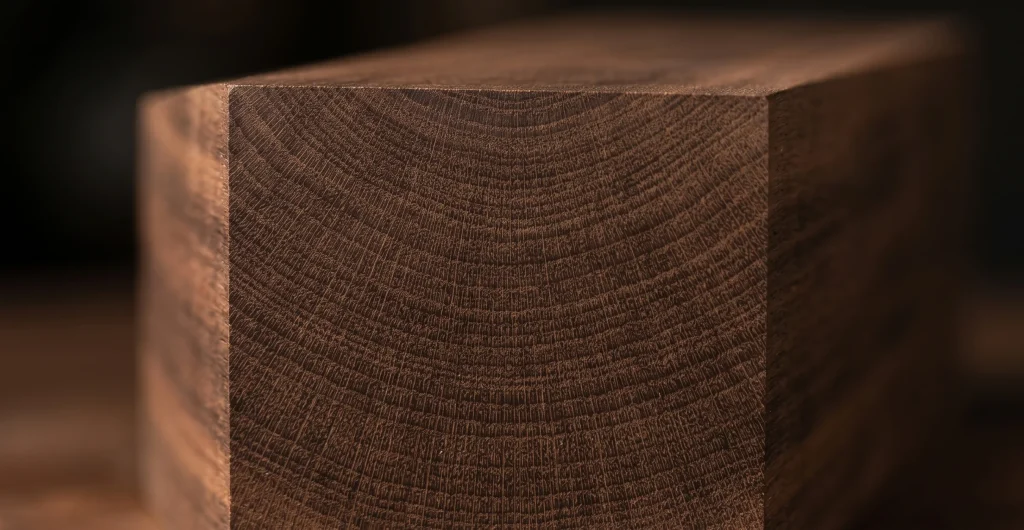
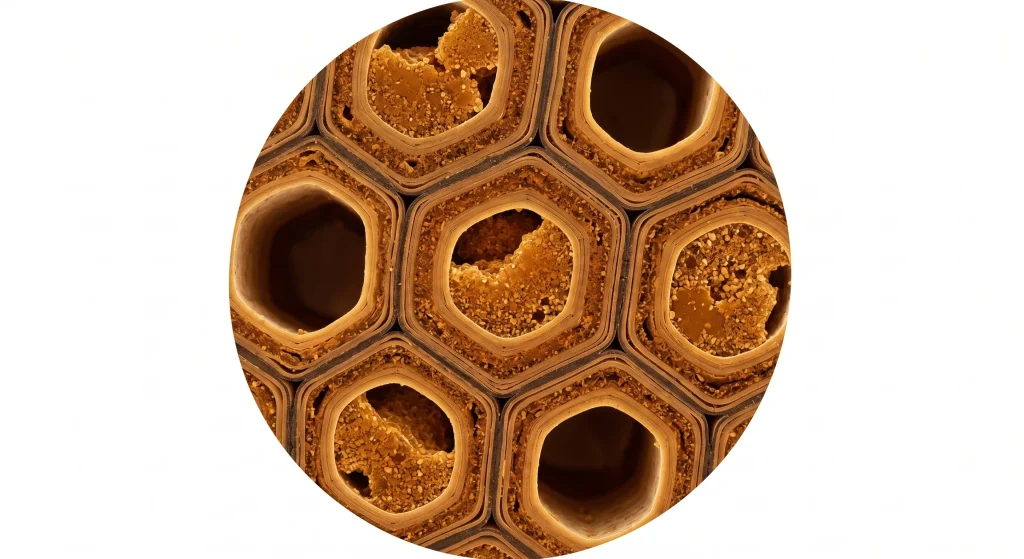
Furan resin modification — the technology used in Ultimate FBR — impregnates timber with furfuryl alcohol, a bio-based compound derived from agricultural waste streams such as sugarcane bagasse and corn cobs. Under heat and an acid catalyst, the furfuryl alcohol polymerises in situ within the cell wall, forming polyfurfuryl alcohol (PFA): a hard, cross-linked polymer that bonds covalently with the wood’s cellulose, hemicellulose, and lignin.
The result is a dual improvement: the polymer physically occupies cell wall space — the bulking effect — reducing the volume available for water uptake; and the polymerisation reaction blocks the free hydroxyl groups that would otherwise attract moisture. Both mechanisms contribute simultaneously to improved dimensional stability and reduced water uptake.
Unlike thermal modification, furfurylation increases wood density and hardness — making it suitable for applications where surface wear resistance matters alongside stability. Unlike acetylation, it uses a bio-based feedstock derived from agricultural residue rather than a petrochemical-derived reagent, and does not impose specific fixing requirements due to material acidity.
Acetylation
Acetylation modifies timber by reacting the cell wall’s free hydroxyl groups with acetic anhydride. The hydroxyl groups are chemically converted to acetyl groups — a permanent substitution that reduces the wood’s affinity for moisture without adding significant mass. The process does not increase density or hardness; acetylated timber is typically slightly less dense than its untreated baseline.
Acetylation generally achieves higher ASE values than furfurylation, and acetylated products typically achieve Class 1 biological durability under EN 350. The trade-offs are reduced surface hardness, the requirement for stainless steel or hot-dip galvanised fixings throughout due to residual material acidity, and a higher cost per cubic metre than most alternatives.
Thermal Modification
Thermal modification exposes timber to temperatures of 160–230°C in a low-oxygen or steam environment. The heat degrades the hemicellulose fraction of the cell wall — the component most responsible for moisture absorption — reducing hygroscopicity and improving dimensional stability. No chemical reagents are introduced.
The limitation of thermal modification is that the same process that improves moisture performance also reduces bending strength, toughness, and impact resistance. Thermally modified timber is generally not recommended for structural or load-bearing applications, and typically achieves lower ASE values than the other two principal technologies.
Technology Comparison at a Glance
| Property | Furan Resin | Acetylation | Thermal Modification |
|---|---|---|---|
| Modification mechanism | Polymer infill + covalent bonding | Chemical -OH substitution | Hemicellulose degradation |
| Effect on density | Significant increase | Slight decrease | Decrease |
| Effect on hardness | Significant increase | Minimal change | Decrease |
| Typical ASE range | 40–50% | 50–65% | 20–40% |
| Durability class (EN 350) | Class 2 (verified) | Class 1 (typical) | Class 2–3 (typical) |
| Structural suitability | Yes | Yes | Limited |
| Fire performance | B-s2-d0 achievable | Standard | Variable |
| Feedstock | Bio-based — agricultural waste | Acetic anhydride | No reagent |
| Fixing requirement | Standard stainless / galvanised | Must be stainless / galvanised | Standard stainless / galvanised |
How Modified Wood Performance Is Measured
Comparing modified wood products across technologies requires a consistent measurement framework. The following metrics are the most relevant for B2B specification and are referenced to named international standards.
Anti-Swelling Efficiency (ASE)
ASE is the primary metric for dimensional stability in modified wood. It expresses the percentage reduction in volumetric swelling of a treated sample compared to an untreated control of the same species, tested under the same conditions:
ASE (%) = [(Swelling untreated − Swelling treated) ÷ Swelling untreated] × 100
A higher ASE means a more dimensionally stable product. An ASE of zero indicates no improvement over the untreated baseline. No commercially available product achieves 100% — the theoretical maximum — but values above 40% represent genuine high performance for exterior timber applications.
ASE data should always be accompanied by the test method used, since values measured by liquid water soaking (full immersion) may differ from those measured by humidity cycling (vapour contact). Both are valid but represent different service scenarios.
Volumetric Swelling
ASE is a relative figure. The absolute volumetric swelling percentage tells a specifier exactly how much the timber moves in response to moisture — the figure that goes directly into a joint design calculation. A board swelling 2.35% by volume behaves very differently in a shadow-gap cladding profile than one swelling 10.04%, regardless of what the relative ASE figure suggests.
Water Uptake
Water uptake — typically expressed as the mass of water absorbed as a percentage of the dry mass of the specimen — reflects the overall moisture affinity of the modified material. High water uptake correlates with faster response to wet-dry cycling and more pronounced dimensional movement. Reduction in water uptake is a direct consequence of the reduction in accessible hydroxyl groups achieved through modification.
Durability Classification — EN 350
Biological durability under EN 350 classifies timber from Class 1 (very durable) to Class 5 (not durable). For exterior applications in Use Class 3 (above ground, weather exposed), Class 2 or better is the appropriate specification threshold. Durability data should be produced by an independent testing body and referenced to the standard by name.
Verified Performance Data: Ultimate FBR Modified Wood
The performance of Ultimate FBR has been independently verified by IPB University (Indonesia) and the Université de Lorraine (France) — two internationally recognised academic research institutions. Results have been validated against EN, BS, ASTM, AWPA, and SNI standards.
| Performance Property | Untreated Hardwood | Ultimate FBR | Test Standard |
|---|---|---|---|
| Density | Baseline | 743 kg/m³ | Tested |
| Volumetric swelling | 10.04% | 2.35% | EN 350 |
| Water uptake | 109.58% | 35.07% | ASTM |
| Anti-Swelling Efficiency (ASE) | — | 44.33% | Tested |
| Durability classification | Class 3–4 (species dependent) | Class 2 | EN 350 |
| Fire performance | Not classified | B-s2-d0 achievable | EN 13501-1 |
Reading the Key Figures
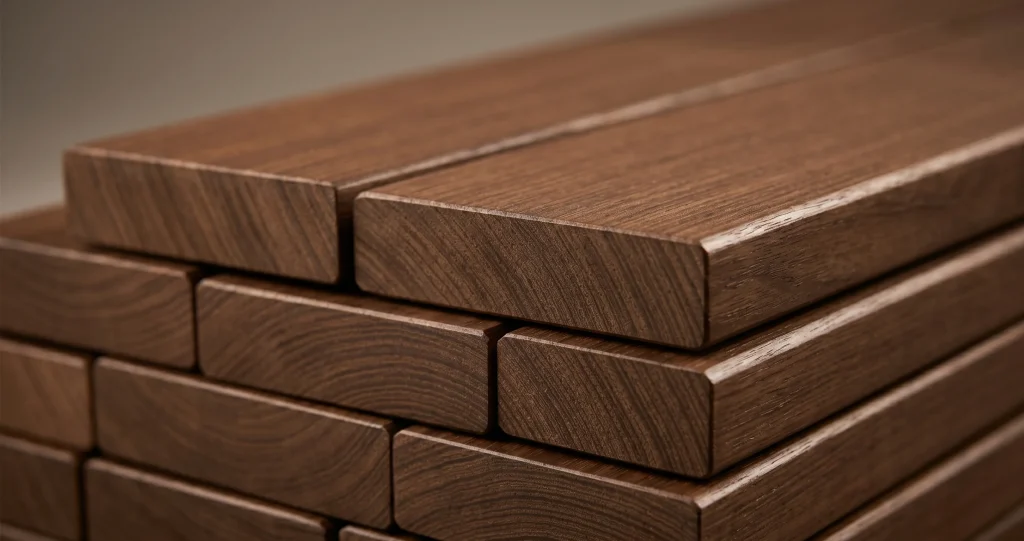
Density: 743 kg/m³ The furan resin polymer deposited within the cell wall adds mass, increasing density significantly compared to the untreated baseline. At 743 kg/m³, Ultimate FBR sits firmly in the hardwood range — relevant for applications where surface hardness and resistance to indentation are specification requirements, such as decking, flooring, and high-traffic joinery.
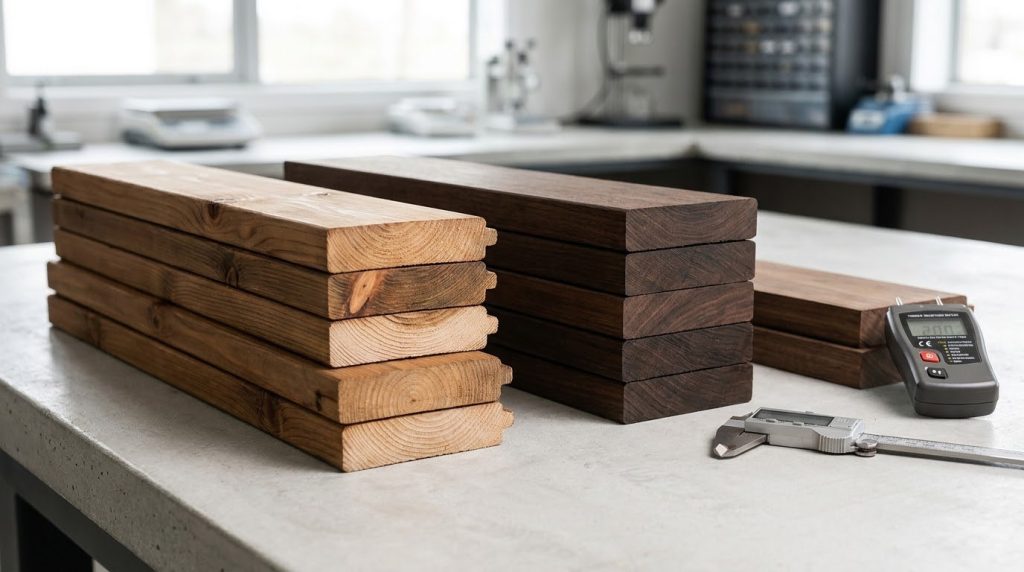
ASE: 44.33% The independently verified ASE of 44.33% means that Ultimate FBR swells 44.33% less by volume than untreated timber of the same species under the same test conditions. This places it in the high-performance range for commercially available modified hardwood. For a 100mm-wide cladding board, this difference in swelling behaviour translates directly into the consistency of shadow gaps, joint performance, and coating durability across the service life of the installation.
Volumetric swelling: 2.35% vs 10.04% The absolute swelling figure of 2.35% is the number that feeds into joint design. Untreated hardwood swelling at 10.04% will open and close joints, stress fixings, and crack surface coatings in ways that a board swelling at 2.35% will not.
Water uptake: 35.07% vs 109.58% Untreated hardwood of this species absorbed more than its own weight in water under test conditions — 109.58% of dry mass. Ultimate FBR absorbed 35.07%. This reduction of approximately 68% reflects the permanent alteration of the cell wall’s moisture affinity through furan resin modification, and it is this reduction that drives improvements in coating durability, joint performance, and biological resistance.
Durability: Class 2 (EN 350) Class 2 durability — verified without the use of biocidal preservatives — indicates suitability for the full range of exterior joinery and cladding applications in Use Class 3. The modification is structural and permanent; unlike preservative treatments, it does not depend on a depletable active agent.
Fire performance: B-s2-d0 achievable Euroclass B-s2-d0 under EN 13501-1 indicates very limited contribution to fire propagation, moderate smoke production, and no flaming droplets or particles. This classification makes Ultimate FBR a specifiable material for projects where Euroclass B fire performance is required — including mid-rise residential and commercial buildings subject to building regulation requirements in the UK and equivalent legislation across European markets.
Why Specify Modified Wood Over Untreated Hardwood or Preservative-Treated Timber?
The specification case for modified wood rests on four converging arguments: performance, permanence, sustainability, and whole-life cost. Each is measurable and verifiable.
Performance That Is Independent of Maintenance
Untreated hardwood and preservative-treated softwood both require periodic maintenance interventions to sustain their performance. Preservative treatments deplete. Surface coatings crack and delaminate as the substrate moves beneath them. The performance of an untreated hardwood cladding board in year fifteen is not the same as its performance in year one — it is the product of how much has been spent maintaining it.
Modified wood’s performance profile does not degrade in the same way. The furan resin polymer within the cell wall of an Ultimate FBR board cannot be washed out, UV-degraded, or mechanically worn away under normal service conditions. The dimensional stability measured in the laboratory reflects the material’s behaviour in service across its full service life.
Permanence vs Depletion
The permanence of cell-wall modification is the most important technical distinction between modified wood and preservative-treated timber. A Class 2 durability classification backed by cell-wall modification is a more robust specification commitment than a Use Class 3 preservative treatment that may require retreatment after a decade.
Sustainability Without Compromise
Modified wood — particularly furan resin modified hardwood produced from managed, certified timber resources — offers a sustainability profile that tropical hardwood cannot match. The feedstock for furfuryl alcohol is agricultural waste: sugarcane bagasse, corn cobs, oat husks. The modification process does not introduce heavy metals, biocidal compounds, or persistent organic pollutants into the material.
Ultimate FBR carries SVLK certification and is FSC® Ready and PEFC™ Ready — enabling chain-of-custody certification on projects where responsible sourcing is a procurement requirement.
Whole-Life Cost
Modified wood typically carries a higher initial material cost than untreated hardwood or preservative-treated softwood. The whole-life cost picture is different. A façade specified in dimensionally stable modified hardwood will require fewer coating maintenance interventions over a 25-year service life than one specified in untreated timber. The maintenance cost differential, discounted over the building’s design life, typically offsets the premium on material cost — and that calculation does not include the costs of premature failure, remediation, or warranty claims that poorly specified untreated timber generates.
Applications for Modified Wood in Construction and Joinery
The performance profile of furan resin modified hardwood — high density, high dimensional stability, Class 2 durability, and achievable Euroclass B-s2-d0 fire performance — maps onto a well-defined set of applications where untreated timber and preservative-treated softwood consistently fall short over long service lives.
Façades and Exterior Cladding
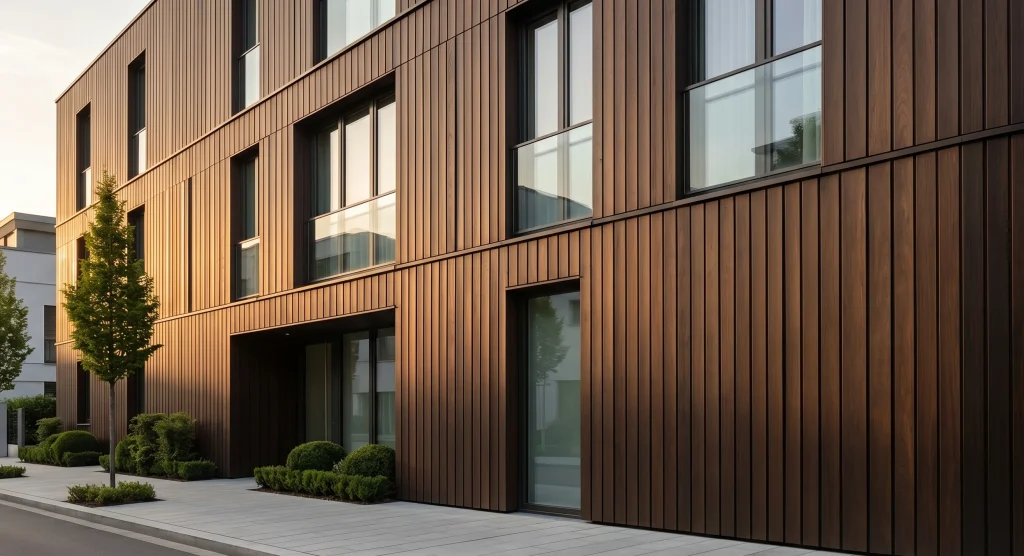
Façade cladding is one of the most demanding applications for any timber material. Boards are exposed to the full range of moisture loading — driving rain, solar heating, freeze-thaw cycling, and differential drying between the weathered face and the cavity-side face. Dimensional instability causes board cupping, joint gap variation, coating delamination, and fixings working loose as boards repeatedly swell and contract around them.
The volumetric swelling of 2.35% and water uptake of 35.07% for Ultimate FBR address the root cause of these failure modes directly. The board moves less, the coating is stressed less, the fixings hold more reliably, and the visual geometry of the façade remains consistent across seasonal moisture cycles.
Window and Door Frames
Timber window frames operate within tight tolerances. The frame must align with glazing units, weatherstrips, and hardware — tolerances measured in fractions of a millimetre that untreated hardwood cannot reliably maintain across years of seasonal moisture cycling. Paint film stress from dimensional movement is the primary mechanism behind coating failure on timber windows; seal failure at glazing junctions and hardware misalignment follow from the same root cause.
The sustained dimensional stability of modified wood through seasonal cycles makes furan resin modified hardwood a technically founded specification choice for joinery manufacturers seeking to reduce warranty claims, extend refinishing intervals, and produce a product with a demonstrably longer service life.
Exterior Decking
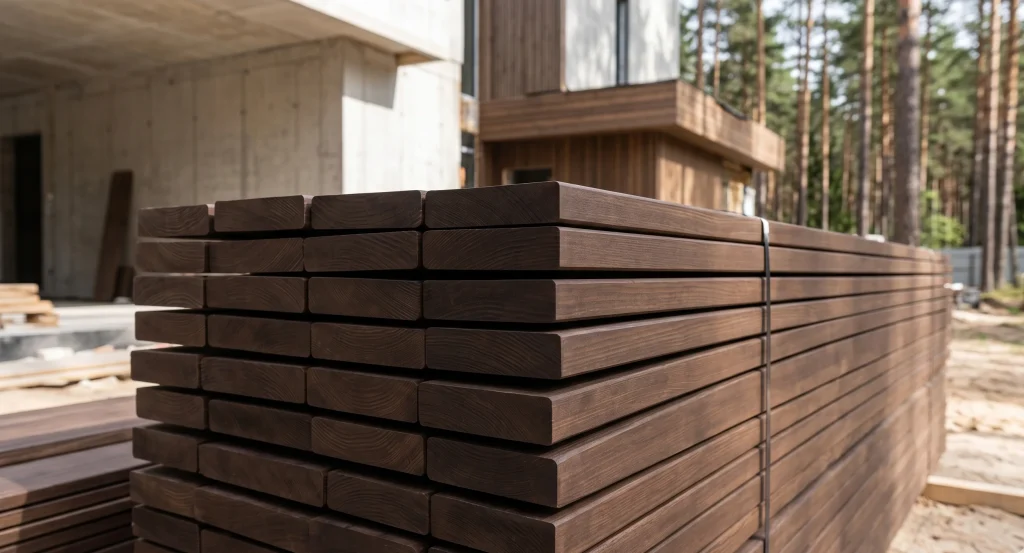
Decking is installed with expansion gaps specifically because untreated timber swells. The increased density of Ultimate FBR (743 kg/m³) contributes to surface hardness and resistance to indentation from furniture and foot traffic. The low volumetric swelling of 2.35% means board edges remain consistent and joint gaps remain predictable — the deck performs in a wet December as it was designed to perform in a dry July.
Interior Joinery and Millwork
Even in interior environments, relative humidity fluctuates. Buildings with underfloor heating, mechanical ventilation, or seasonal air conditioning can experience humidity swings sufficient to move dimensionally unstable timber visibly at joints, mitres, and panel edges. The uniform dark-brown colour of Ultimate FBR, combined with the complete absence of knots and defects, also makes it a premium specification choice for visible interior applications where consistent appearance matters as much as structural performance.
Specifying Modified Wood: What to Verify Before Procurement
The modified wood market is not uniformly regulated. Performance claims vary significantly in their basis. The following checklist provides a consistent framework for evaluating any modified wood product at the procurement stage.
1. Is the performance data from an independent testing body? Require data from a named independent institution. For Ultimate FBR, performance has been independently tested by IPB University (Indonesia) and the Université de Lorraine (France) — academic research institutions with no commercial interest in the product.
2. Are test results referenced to named international standards? ASE, volumetric swelling, water uptake, and durability data should each cite the specific standard — EN 350, ASTM, EN 13501-1, SNI. Data without a standard reference cannot be meaningfully compared across products.
3. What is the weight percentage gain (WPG) of the modification? WPG is the technical measure of modification intensity in furfurylated wood. Higher WPG correlates with better dimensional stability and durability up to a threshold. A supplier able to provide WPG data is demonstrating process transparency.
4. What certifications does the product carry? Ultimate FBR carries SVLK certification (Indonesia’s mandatory timber legality verification system) and is FSC® Ready and PEFC™ Ready, enabling chain-of-custody certification where required.
5. Is durability achieved through modification or preservative treatment? A Class 2 modified wood product does not require biocidal retreatment to maintain its classification. A Class 2 preservative-treated product depends on the continued efficacy of its treatment. Confirm which mechanism underpins the durability claim.
6. What size range is available, and can supply be maintained at project scale? Ultimate FBR is available in 12–32mm × 90–285mm × 900–5900mm. Distribution is through Houtplex B.V. in Haaksbergen, Netherlands for European markets and Wood United Pte Ltd in Singapore for Asian and Pacific markets, both part of the Wood United Group.
Frequently Asked Questions about Modified Wood
What is modified wood?
Modified wood is timber in which the cell wall structure has been permanently altered through a chemical or thermal process to improve performance in service. The modification produces improvements in dimensional stability, biological durability, and moisture resistance that are intrinsic to the material — not dependent on surface coatings or depletable preservative treatments. The three main commercial modification technologies are furan resin modification (furfurylation), acetylation, and thermal modification, each targeting the free hydroxyl groups in the cell wall that drive moisture uptake and dimensional instability in untreated timber.
Is modified wood better than regular wood?
For exterior and demanding joinery applications — cladding, decking, windows, door frames — modified wood outperforms untreated timber on the performance criteria that determine service life: dimensional stability, biological durability, moisture resistance, and coating longevity. The specification decision should be driven by verified performance data referenced to the service conditions of the specific application, not by category preference.
What are the different types of modified wood?
The three principal commercially available modification technologies are furan resin modification (furfurylation), acetylation, and thermal modification. Furfurylation impregnates the cell wall with a bio-based polymer that increases density, hardness, and dimensional stability. Acetylation chemically substitutes the cell wall’s hydroxyl groups to reduce moisture affinity without adding mass. Thermal modification uses elevated temperature to degrade the hemicellulose fraction of the cell wall, improving stability but reducing bending strength.
Is modified wood safe?
Modified wood produced through furan resin modification, acetylation, or thermal modification is safe for use in occupied buildings and exterior applications. None of these processes introduces biocidal heavy metals, copper compounds, chromium, or arsenic into the material. For furan resin modified timber, research published in Environmental Toxicology and Chemistry has found that leachates from properly cured furfurylated wood generally display low toxicity. The bio-based feedstock of furfuryl alcohol (agricultural waste) and the absence of biocidal chemistry position furan resin modified timber among the more environmentally benign options in the category.
How long does modified wood last?
Service life depends on the modification type, the durability classification achieved, the application, and the maintenance regime applied. For furan resin modified hardwood achieving Class 2 durability under EN 350 — such as Ultimate FBR — the expected service life in above-ground exterior Use Class 3 conditions is 15–25 years without biocidal retreatment, with UV-stabilising coating maintenance as the primary ongoing requirement. Detailing quality and maintenance compliance are as influential as material specification in determining actual service life.
What is the difference between modified wood and pressure-treated wood?
The fundamental difference is the mechanism of performance. Pressure-treated timber drives biocidal preservatives into the wood under pressure; the wood itself is not structurally altered. Its durability depends on the continued presence of those biocidal agents, which deplete over time. Modified wood permanently alters the cell wall structure itself — there is no depletable active agent and the performance does not diminish as the timber ages in service. Modified wood contains no biocidal compounds and poses no toxicological hazard in normal building use.
Is modified wood waterproof?
Modified wood is not waterproof — no solid wood product is fully impervious to moisture. What modification achieves is a significant and permanent reduction in moisture uptake and dimensional response. Ultimate FBR absorbs 35.07% of its dry mass in water under test conditions, compared to 109.58% for untreated hardwood — a reduction of approximately 68%. This substantially mitigates the swelling, shrinkage, and joint movement that moisture uptake causes in untreated timber, but does not eliminate moisture interaction entirely. A UV-stabilising oil or finish is recommended for exterior applications.
What is modified wood used for?
Modified wood is used primarily in applications where untreated timber’s moisture sensitivity, dimensional instability, or insufficient durability would compromise performance or require unacceptably intensive maintenance. The principal applications are exterior cladding and façades, decking, timber window and door frames, exterior joinery, and interior millwork in demanding humidity environments. For Ultimate FBR specifically, the combination of Class 2 durability, ASE 44.33%, density 743 kg/m³, and achievable Euroclass B-s2-d0 fire performance makes it suitable for the full range of these applications — including mid-rise and commercial projects where fire performance classification is a regulatory requirement.
| Property | Untreated Hardwood | Ultimate FBR |
|---|---|---|
| Durability class | Class 3–4 (EN 350) | Class 2 (EN 350:2016) |
| Volumetric swelling | 10.04% | 2.35% |
| Water uptake | 109.58% | 35.07% |
| Anti-Swelling Efficiency | — | 44.33% |
| Density | Baseline | 743 kg/m³ |
| Fire performance | Not classified | B-s2-d0 achievable |
Technology: Furan resin modification (furfurylation) — bio-based, non-biocidal, permanent cell wall modification.
Independent verification: IPB University (Indonesia) & Université de Lorraine (France).
Test standards: EN 350:2016, EN 13501-1, ASTM, AWPA, SNI.
Certifications: SVLK (EU FLEGT recognised) · FSC® Ready · PEFC™ Ready.
Supply: Houtplex B.V., Netherlands (Europe) · Wood United Pte Ltd, Singapore (Asia-Pacific).
Sizes: 12–32mm × 90–285mm × 900–5900mm.
Applications: Façade cladding · Decking · Window frames · Door frames · Interior joinery.
Specify Modified Wood with Verified Performance Data
The modified wood category offers genuine performance advantages over untreated timber and preservative-treated alternatives — but only when those advantages are supported by independently verified data referenced to named standards. Marketing claims without independent testing cannot be used to defend a specification, satisfy a procurement requirement, or provide meaningful performance assurance to a client.
Ultimate FBR is independently tested by IPB University and the Université de Lorraine, France. Performance data — ASE 44.33%, volumetric swelling 2.35%, water uptake 35.07%, density 743 kg/m³, Class 2 durability under EN 350, Euroclass B-s2-d0 fire performance — is referenced to EN, BS, ASTM, AWPA, and SNI standards. Responsible sourcing is covered by SVLK certification and FSC® Ready and PEFC™ Ready status.
For project-specific technical documentation, sizing requirements, or supply enquiries, contact the Ultimate FBR team via the contact form. European supply is handled by Houtplex B.V. in Haaksbergen, Netherlands; Asian and Pacific market enquiries by Wood United Pte Ltd in Singapore — both part of the Wood United Group.